The owner’s independent roof expert

Independent Commercial Roof Inspection: The Complete Guide for Building Owners

Understand your roof’s true condition before you approve repairs, replacement, or a major capital expense.

75,000+roofs inspected
250 million+square feet covered
25+ yearsof experience

We do not sell roofs.
We help you understand yours.

A clear starting point

Your roof is a capital asset. Treat the decision like one.

Your roof is one of the largest capital assets on your building, and one of the few where the advice most owners receive comes from someone who profits from the answer. This guide explains what an independent commercial roof inspection is, how it works, and how building owners, property managers, and boards use one to make defensible roof decisions. Use it as a starting point, then follow the linked resources for the checklist, the consultant comparison, and the leak and repair-vs.-replace decision path.

Start with the definition

What Is an Independent Commercial Roof Inspection?

Clear answerAn independent commercial roof inspection is a paid, third-party evaluation of a commercial, industrial or multi-family roof performed by a consultant who does not sell or install roofing. Because the inspector has no repair or replacement work to win, owners receive documented, unbiased findings they can use to plan repairs, compare bids, budget, and decide between repair and replacement.

The word that matters most in that definition is independent. Plenty of companies will look at your roof. The difference is what they are looking for. A company that installs roofing is evaluating your roof, at least in part, as a potential project. An independent consultant is evaluating your roof as your representative. The deliverable is not a proposal for work — it is a documented, objective picture of the roof’s actual condition and a set of clear next steps you can act on.

That distinction changes how the findings can be used. An independent inspection report can support a repair budget, justify a capital reserve line item, anchor a bid comparison, or defend a repair-instead-of-replace decision to a board or finance team — precisely because no one involved in producing it stands to gain from the outcome.

You will see several names for the same idea as you research: third-party roof inspection, unbiased roof inspection, owner-side condition assessment. Whatever the label, the test is simple — ask whether the company evaluating the roof also sells repair, replacement, or materials. It is equally important to be clear about what an independent inspection is not. It is not a municipal or code inspection, it is not a step in anyone’s sales process, and it is not a quick courtesy walk-over. It is a professional evaluation, commissioned by you, that exists to give you an accurate picture of an expensive asset.

Support a repair budget
Plan capital reserves
Compare bids fairly
Defend repair vs. replace

One side of the table: yours

Why Independence Matters When Your Roof Is on the Line

A commercial roof decision is rarely small. Repair-vs.-replace questions, competing bids, recurring leaks, and reserve planning all carry real budget consequences, and the wrong call can follow an owner or a board for years. When the stakes are that high, the quality of the decision depends on the quality — and the neutrality — of the information behind it.

Consider how many decisions rest on a single assessment of roof condition: whether to repair or replace, how much to hold in reserves, which bid to accept, whether a warranty issue is worth pursuing, how to schedule work around tenants and operations, and what to tell a board or finance committee that has to approve the spending. If the assessment underneath those decisions is shaded — even slightly — toward the interests of the company that produced it, every downstream decision inherits that bias. Independent findings reset the foundation.

Alliance’s role
“We do not sell roofs. We help you understand yours.”

No roof sales or installations — just unbiased consulting to help you make informed decisions.

We do not sell roofs — the consultant’s role explained

Alliance Consulting & Testing operates on one side of the table only: yours. We do not sell roofs. We help you understand yours. No roof sales or installations — just unbiased consulting to help you make informed decisions.

Professional bodies such as the International Institute of Building Enclosure Consultants (IIBEC) describe the roof consultant’s role as providing objective condition assessments, specifications, and quality assurance — work that is deliberately separate from selling or installing roofing systems. That is the role Alliance has filled for more than 25 years, across 75,000+ roofs inspected and 250 million+ square feet of commercial and multi-family roofing.

In practice, an independent consultant’s work spans the whole life of a roof decision: independent and annual inspections, leak detection and analysis, repair-vs.-replacement consulting, roof specs and bids, replacement quality assurance, and building envelope analysis. Each engagement produces documentation the owner keeps and controls.
The conflict of interest built into seller-provided assessments

To be clear: most roofing companies are not acting in bad faith when they assess a roof. But the structure of the arrangement matters. When the person evaluating your roof also earns revenue from repairing or replacing it, the assessment and the sale are connected — and it becomes difficult for you, the owner, to know where one ends and the other begins.

That structural conflict shows up in predictable ways: findings framed around the work the evaluator performs, replacement recommended where targeted repair might serve, and reports written to support a proposal rather than a decision. An independent inspection removes the question entirely. When the findings are the only product, the findings can be trusted on their own terms.

Owners feel this most sharply at bid time. When each bidder defines its own scope, prices arrive that cannot be compared line for line — and the owner ends up choosing on price or persuasion rather than substance. An independent baseline assessment, established before bids are requested, is what makes true comparison possible. For a fuller comparison of the two approaches, see why building owners hire independent roof consultants.

A systematic evaluation

What a Commercial Roof Inspection Covers

A thorough commercial roof inspection is systematic, not a quick walk-around. While scope varies by roof and engagement, a professional inspection generally evaluates the categories below and documents what it finds.

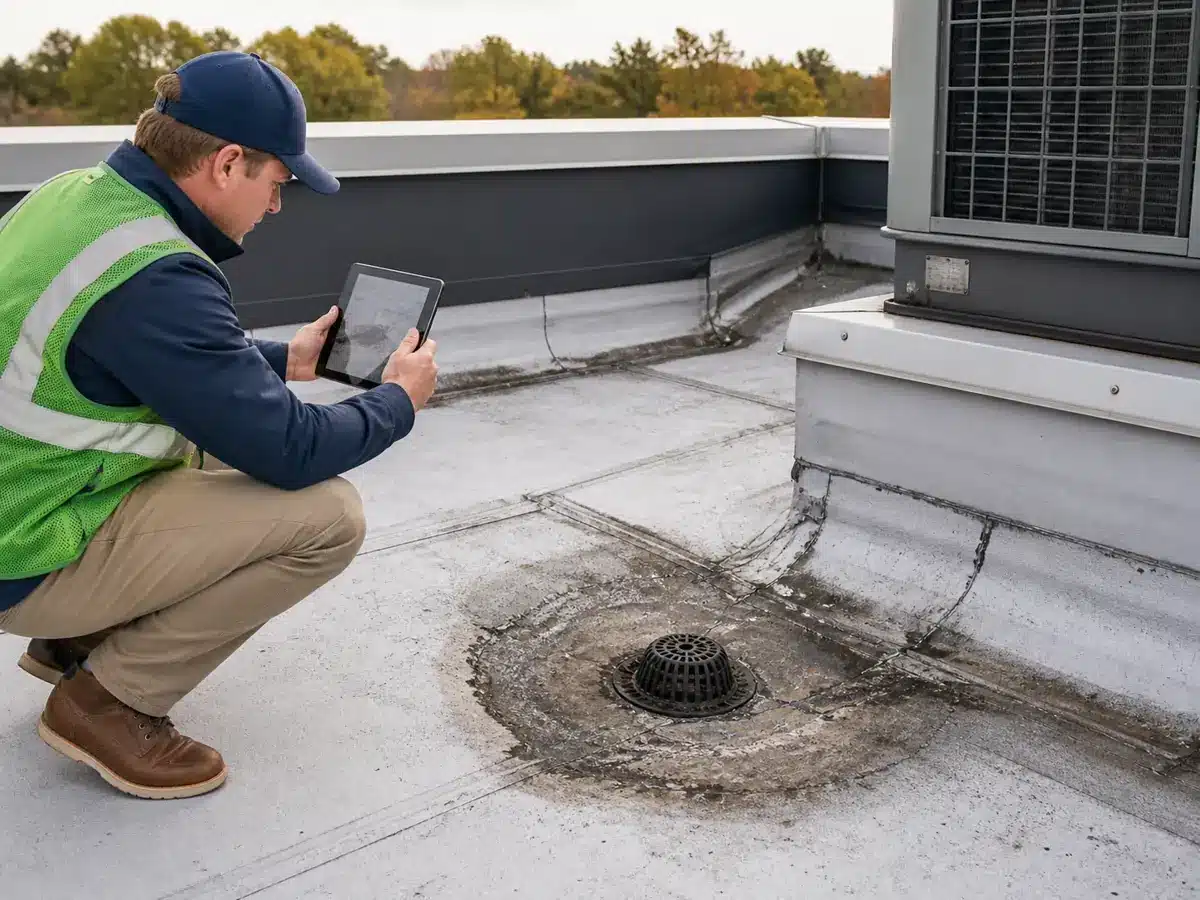
Independent consultant documenting conditions during a commercial roof inspection.
Documented conditions create a roof record owners and boards can understand.
01

Roof surface

Membrane condition, deterioration, punctures, seams, blistering, repairs, and age.

02

Drainage

Ponding water, drains, scuppers, slope, debris, and patterns that shorten service life.

03

Flashings and penetrations

Edges, walls, curbs, HVAC supports, pipes, transitions, and terminations.

04

Interior evidence

Stains, active drips, odors, damaged finishes, moisture patterns, and leak history.

Roof surface, drainage, flashing, and penetrations

The roof surface and membrane are examined for deterioration, punctures, open seams, blistering, and signs of aging appropriate to the roof system type. Drainage is a core focus: ponding water, clogged drains and scuppers, and slope issues are among the most common contributors to premature roof problems. Flashings — where the roof meets walls, edges, and equipment — along with penetrations such as pipes, curbs, and HVAC supports, are inspected closely because transitions and terminations are frequent points of water entry. Roof edges, coping, and rooftop equipment conditions round out the exterior review.

Commercial roof systems vary — single-ply membranes such as TPO, EPDM, and PVC, modified bitumen, built-up roofing, metal, shingles, tile and slate each age differently — so a competent inspector evaluates conditions against what deterioration actually looks like for that system, rather than applying a one-size-fits-all lens. Roof age and repair history matter here too: the same blister or seam condition can mean very different things on a five-year-old roof than on one approaching the end of its expected service life.

Interior evidence and documentation

The roof tells one half of the story; the building interior often tells the other. Stains, active drips, damaged finishes, and odor or moisture patterns help an inspector correlate what is happening above with what is showing up below. Throughout the inspection, conditions are photographed and documented so the owner receives written findings rather than verbal impressions. Industry guidance from organizations such as the National Roofing Contractors Association (NRCA), and property-protection resources published by insurers such as Travelers, consistently emphasize regular inspection and documentation as the foundation of managing a roof as an asset.

Good inspections also connect current observations to history. Prior reports, repair invoices, and leak logs let the inspector distinguish a stable, documented condition from an active, progressing one — which is often the difference between a monitor-it recommendation and a fix-it-now recommendation.

The result is a roof inspection report you can act on. The goal, in Alliance’s words, is reports owners and boards can understand — findings in plain English, connected to practical next steps.

Follow the question in front of you

This pillar gives you the full picture. These focused resources take you deeper into the next decision.

Process authority

The Inspection Checklist and Process

If you want to understand exactly what a proper inspection reviews — and what you can safely observe yourself from the interior and ground level before bringing in a professional — start with the item-by-item resource: the commercial roof inspection checklist.

It walks through the documents to gather before an inspection, the interior warning signs worth logging, the roof-surface, drainage, flashing, and penetration items a professional evaluates, and how to document what you find. It also explains where a self-check ends and a professional independent inspection begins — an important line, because a checklist supports good decisions but does not replace trained evaluation.

Inside the checklist resource:

  • The documents and roof history to gather before any inspection
  • Interior warning signs — stains, odors, and patterns worth logging
  • The roof-surface, drainage, flashing, and penetration items a professional reviews
  • How to document findings so they support budget decisions

View the checklist →

Trust authority

Why Building Owners Hire Independent Roof Consultants

Understanding what an inspection covers is only half the question. The other half is who should perform it — and why so many owners, managers, and boards specifically choose an independent consultant over relying on the assessment of the company hoping to do the work.

The short version: independence produces findings you can defend. The full version — including what a consultant actually does, when to bring one in, and what independence has saved real owners — is covered in why building owners hire independent roof consultants.

That page covers:

  • The conflict of interest built into seller-provided roof advice, explained without drama
  • What a consultant actually does across inspections, specs, bids, and quality assurance
  • The approved savings examples behind Alliance’s independent findings
  • The three moments when bringing in a consultant matters most

Understand the difference →

Decision authority

Leaks, Detection, and the Repair vs. Replace Decision

Many owners first look for an inspection when water is already showing up inside the building. Leaks are urgent, but they are also frequently misdiagnosed — water travels, so the source is rarely directly above the stain, and a patch placed on the wrong spot leads to the familiar cycle of recurring leaks and mounting frustration.

Diagnosis should come before any repair-or-replace conversation. Our guide to commercial roof leak detection explains how leaks are traced from interior evidence back to their true source, when moisture and infrared surveys add value, and how documented findings drive a rational repair-vs.-replace decision instead of a premature replacement.

That guide walks through:

  • Why the leak source is rarely where the stain suggests
  • How systematic detection separates roof leaks from building envelope issues
  • When infrared and moisture surveys earn their cost
  • How documented findings turn repair-vs.-replace into an evidence decision

Follow the decision path →

For the people responsible for the roof and the budget

Who This Guide Is For

Alliance serves commercial and multi-family property stakeholders. If you are responsible for a roof and the budget behind it, this guide — and the network of resources it links to — was written for you.

Commercial building owner reviewing roof conditions with an independent consultant.

Commercial portfolios

Commercial building owners and facility managers

Owners, asset managers, and facilities leaders use independent inspections to protect capital budgets: establishing a roof’s actual condition, planning maintenance and repairs, verifying what a bid should include, and building a defensible record for repair-vs.-replace decisions. For facilities teams, the documented findings also make it easier to prioritize work and justify requests internally.

Typical situations: an aging roof entering the capital plan, a replacement proposal that arrived faster than expected, a portfolio that needs consistent condition baselines across buildings, or a facilities team that wants inspection findings it can prioritize and act on.

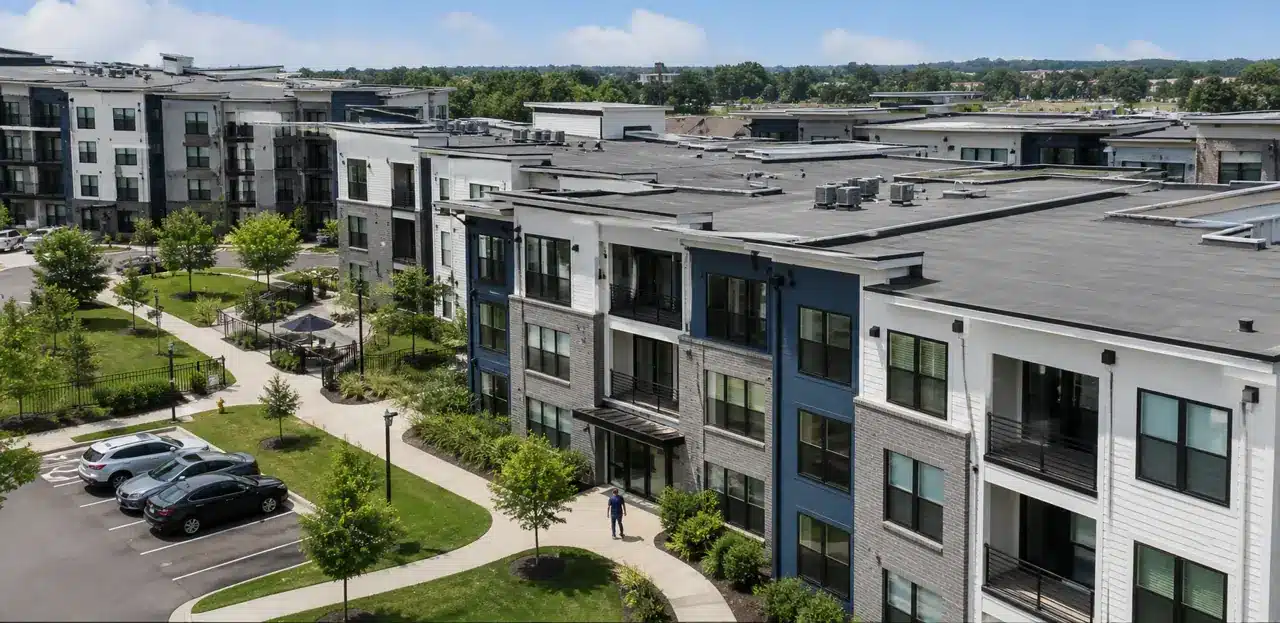
Independent roof inspections for multi-family and HOA communities.

Multi-family and HOA

Property managers, multi-family owners, and HOA boards

Property managers and boards carry a different pressure: they must explain and defend roof decisions to owners, residents, and finance committees. Independent inspection reports give them contractor-neutral documentation for reserve planning, board approvals, and bid processes — clarity that reduces conflict and makes the right decision easier to approve.

Typical situations: reserve studies that need real roof data, board members asking whether replacement is truly necessary, resident complaints that keep returning after repairs, and bids so different from one another that the board cannot compare them.

Owner outcomes

Proof: What Independent Inspections Have Saved Owners

Independent guidance. Clear answers. Measurable savings. Alliance’s track record includes 75,000+ roofs inspected, 250 million+ square feet covered, and 25+ years of experience — and the savings that independence has produced for real owners:

$400,000saved for a commercial facility in Indiana
$375,000saved for an HOA in Kentucky
$37,000saved on a church bid comparison in Oregon
$200,000saved for a property management company in Indianapolis

Each of these outcomes came from the same principle: when the evaluation is separated from the sale, owners often discover they need less work — or different work — than they were told.

Read Case Study

A practical path forward

Next Steps — Schedule a Call

If you are facing a roof decision — a leak, an aging roof, conflicting bids, an annual inspection need, or a board that wants documentation — the path is simple: Schedule a Call, Get an Independent Inspection, and Receive Clear Next Steps.

You will talk with an independent consultant whose only job is to help you understand your roof, not to sell you one. From there, you decide what happens next, with findings you can trust.

Any of these is a good reason to schedule: a leak that has returned more than once, a roof approaching a milestone birthday, a repair or replacement proposal awaiting approval, an annual inspection you keep postponing, or a board meeting where the roof is on the agenda. The earlier independent findings enter the process, the more options you keep — and the less you spend reacting.

Schedule a Call

  1. 1

    Schedule a Call

    Tell us about the property and the decision in front of you.

  2. 2

    Get an Independent Inspection

    Alliance documents the roof’s condition and what actually matters.

  3. 3

    Receive Clear Next Steps

    Use practical findings for repairs, replacement, bidding, or planning.

Common questions

Frequently Asked Questions

What is an independent commercial roof inspection?

An independent commercial roof inspection is a paid evaluation of a commercial, industrial or multi-family roof performed by a third-party consultant who does not sell or install roofing. The inspection documents the roof’s actual condition so the owner can plan repairs, budgets, bids, or replacement based on unbiased findings rather than a proposal for work.

How is an independent inspection different from a contractor’s inspection?

A contractor’s inspection is usually connected to winning repair or replacement work, which can shape what gets recommended. An independent inspection is paid for by the owner, and the findings are the only product. That separation is what makes independent results dependable for bid comparisons, reserve planning, and board-level decisions.

What does the inspection report include?

You receive written, documented findings you can act on. The goal is a report owners and boards can understand: the roof’s condition, the issues that matter, and recommended next steps in plain English. Exact contents vary with the scope of the engagement, so ask what will be documented when you schedule your inspection.

Do you inspect multi-family and HOA properties?

Yes. Alliance Consulting & Testing serves commercial building owners, facility managers, asset managers, property managers, multi-family owners, and HOA boards. Multi-family communities and associations frequently use independent inspections to support reserve planning and to give boards defensible, contractor-neutral documentation for roof decisions.

How do I schedule an inspection?

Schedule a Call at 888-777-7001 or through our commercial roof consultants page. The process is straightforward: Schedule a Call, Get an Independent Inspection, and Receive Clear Next Steps you can use for repair, replacement, bidding, or annual planning decisions.

The owner’s independent roof expert

Before You Commit to a Major Roof Decision, Get an Independent Expert on Your Side.

If you are weighing bids, dealing with repeat leaks, or trying to decide whether replacement is truly necessary, Alliance can help you make the next move with clarity.